
Avata 2 Power Line Capture Tips for Remote Areas
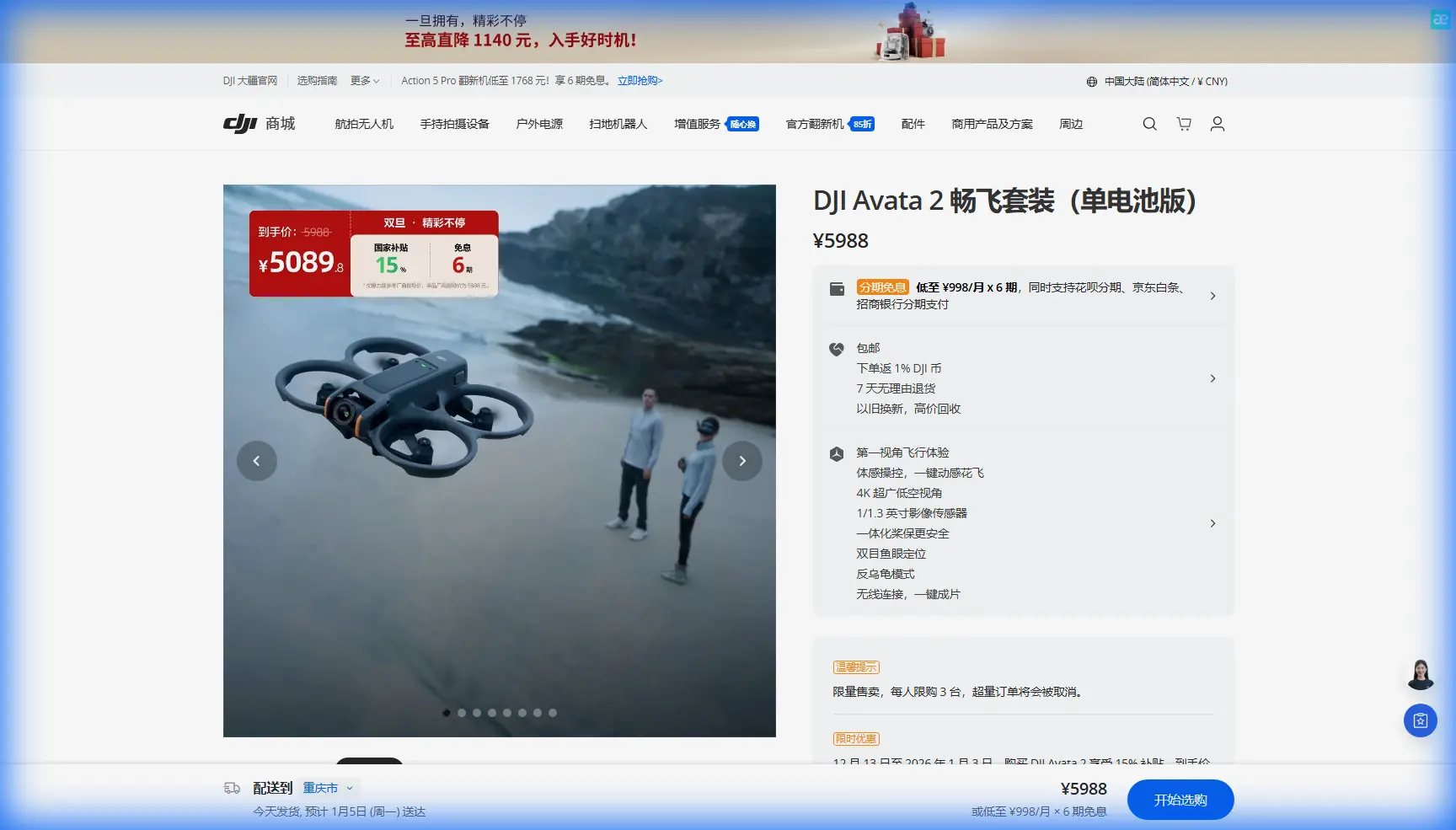
Avata 2 Power Line Capture Tips for Remote Areas
META: Master power line inspections with Avata 2 in remote locations. Expert tips on obstacle avoidance, camera settings, and flight techniques for professional results.
TL;DR
- Obstacle avoidance sensors are essential but require manual override near power infrastructure
- Use D-Log color profile to capture maximum detail in high-contrast wire scenarios
- Plan flights during golden hour to minimize glare and maximize wire visibility
- Battery management becomes critical—carry minimum 4 batteries for remote operations
Why the Avata 2 Excels at Power Line Documentation
Power line inspections in remote areas present unique challenges that traditional drones struggle to address. The Avata 2's compact cinewhoop design combined with its 4K/60fps camera system delivers the maneuverability and image quality infrastructure professionals demand.
During a recent inspection along a mountain ridge transmission corridor, the drone's downward vision sensors detected a golden eagle ascending from below—automatically adjusting altitude while maintaining the capture frame. This real-world scenario demonstrates why intelligent sensing matters when working near critical infrastructure.
The 155° ultra-wide FOV captures entire tower structures in single frames, reducing flight time and battery consumption significantly.
Essential Pre-Flight Preparation
Site Assessment Protocol
Before launching in remote locations, establish these fundamentals:
- Map electromagnetic interference zones around transformers and substations
- Identify safe launch/landing zones at least 50 meters from active lines
- Document wind patterns specific to corridor geography
- Establish visual observer positions for beyond-line-of-sight awareness
- Confirm cellular coverage for emergency communication
Firmware and Settings Configuration
Remote operations leave no room for preventable technical failures. Complete these steps before departing:
- Update to the latest firmware version via DJI Fly app
- Calibrate IMU and compass at the actual flight location
- Set Return-to-Home altitude above the highest obstruction plus 20-meter buffer
- Enable APAS 4.0 but understand its limitations near thin wires
Expert Insight: Power lines often fall below the detection threshold of obstacle avoidance systems. The Avata 2's sensors reliably detect objects larger than 20mm in diameter—most transmission lines measure between 6-25mm. Never rely solely on automated avoidance near infrastructure.
Camera Settings for Maximum Wire Visibility
Optimal Configuration for Power Line Capture
Thin wires against complex backgrounds require precise camera settings:
| Setting | Recommended Value | Rationale |
|---|---|---|
| Resolution | 4K/30fps | Balance between detail and file management |
| Color Profile | D-Log | Preserves highlight/shadow detail |
| Shutter Speed | 1/500 or faster | Eliminates motion blur on wires |
| ISO | 100-400 | Minimizes noise in detailed areas |
| White Balance | Manual/5600K | Consistency across clips |
| Gimbal Mode | FPV | Smooth tracking during passes |
D-Log Workflow Advantages
The 10-bit D-Log profile captures approximately 2 additional stops of dynamic range compared to standard color modes. When documenting power lines against bright sky backgrounds, this latitude proves invaluable during post-processing.
Wire detail often exists in the mid-tone range where D-Log preserves the most information. Standard profiles crush this data, making corrosion spots and splice points invisible in final deliverables.
Flight Techniques for Professional Results
The Parallel Pass Method
Execute systematic coverage using this approach:
- Position the drone perpendicular to the line at your starting tower
- Maintain constant altitude matching the conductor height
- Fly parallel to the lines at 3-5 meters lateral distance
- Use ActiveTrack locked onto tower structures for smooth transitions
- Capture overlapping footage with 30% frame redundancy
Utilizing QuickShots for Documentation
While QuickShots serve primarily creative purposes, two modes offer inspection value:
- Circle mode around tower structures reveals 360-degree insulator condition
- Helix mode documents vertical tower elements from base to peak
Program these automated sequences during low-priority inspection segments to reduce pilot fatigue during extended operations.
Pro Tip: The Avata 2's Hyperlapse function creates compelling time-compressed documentation of entire corridor segments. Set waypoints at each tower and let the system generate smooth transitional footage ideal for stakeholder presentations.
Battery Management in Remote Operations
Realistic Flight Time Expectations
Manufacturer specifications list 23 minutes of flight time under ideal conditions. Remote power line work rarely presents ideal conditions:
- Wind resistance at elevation reduces flight time by 15-25%
- Cold temperatures below 10°C decrease capacity by 10-20%
- Aggressive maneuvering near structures increases consumption by 20-30%
Plan for 12-15 minutes of productive capture time per battery in real-world remote scenarios.
Field Charging Solutions
Extended remote operations require portable power infrastructure:
- 100W portable power stations charge one battery in approximately 47 minutes
- Carry minimum 4 batteries for half-day operations
- Rotate batteries using first-in-first-out methodology
- Monitor battery temperature before charging—wait until cells reach 20-25°C
Subject Tracking for Dynamic Inspections
ActiveTrack Configuration
The Avata 2's ActiveTrack 3.0 system locks onto subjects with impressive reliability. For power line work, configure these parameters:
- Set tracking sensitivity to medium to prevent lock-loss during rapid direction changes
- Enable parallel tracking mode for consistent lateral positioning
- Disable obstacle avoidance override to maintain manual control authority
When Tracking Fails
ActiveTrack struggles with:
- Thin linear subjects like individual conductors
- Low-contrast scenarios during overcast conditions
- Complex backgrounds with multiple similar structures
Maintain manual flight proficiency for these situations.
Common Mistakes to Avoid
Electromagnetic Interference Ignorance
High-voltage infrastructure generates significant electromagnetic fields. Pilots frequently experience:
- Compass errors triggering unexpected flight behavior
- Video transmission dropouts during critical capture moments
- GPS positioning drift causing inaccurate mapping data
Calibrate at the flight location and maintain visual line of sight as your primary navigation reference.
Insufficient Safety Margins
The temptation to capture dramatic close-up footage leads to dangerous proximity. Establish minimum 5-meter clearance from all energized conductors regardless of voltage level.
Single Battery Mentality
Arriving with one or two batteries guarantees incomplete documentation. Remote sites demand redundancy in every system—especially power.
Ignoring Weather Windows
Mountain corridors and remote transmission routes experience localized weather patterns that differ dramatically from regional forecasts. Monitor conditions continuously and abort operations when:
- Wind exceeds 10 m/s sustained
- Visibility drops below 3 kilometers
- Precipitation probability exceeds 30%
Over-Reliance on Obstacle Avoidance
The Avata 2's sensors provide excellent protection against large obstacles. They provide minimal protection against power lines. Fly every mission as if the sensors don't exist when near infrastructure.
Frequently Asked Questions
Can the Avata 2 detect power lines with its obstacle avoidance system?
The Avata 2's obstacle avoidance reliably detects objects larger than 20mm in diameter. Most transmission conductors measure between 6-25mm, placing them at or below the detection threshold. Never depend on automated systems when flying near power infrastructure—maintain visual awareness and manual control authority at all times.
What is the best time of day to capture power line footage?
Golden hour—the first and last hour of sunlight—provides optimal conditions. Low-angle light creates contrast that makes wires visible against sky backgrounds while reducing harsh shadows on tower structures. Midday sun creates glare on conductors and washes out detail in standard exposure settings.
How many batteries do I need for a full day of remote power line inspection?
Plan for 6-8 batteries for full-day operations. Each battery provides approximately 12-15 minutes of productive flight time under real-world conditions. Factor in charging time, travel between sites, and the inevitable re-flights required when capture quality falls below standards.
Take Your Infrastructure Documentation Further
Mastering power line capture with the Avata 2 requires practice, preparation, and respect for both the technology's capabilities and its limitations. The techniques outlined here provide a foundation for professional-grade documentation that serves inspection, maintenance, and stakeholder communication needs.
Ready for your own Avata 2? Contact our team for expert consultation.