
Expert Coastal Cinematography with DJI Avata 2
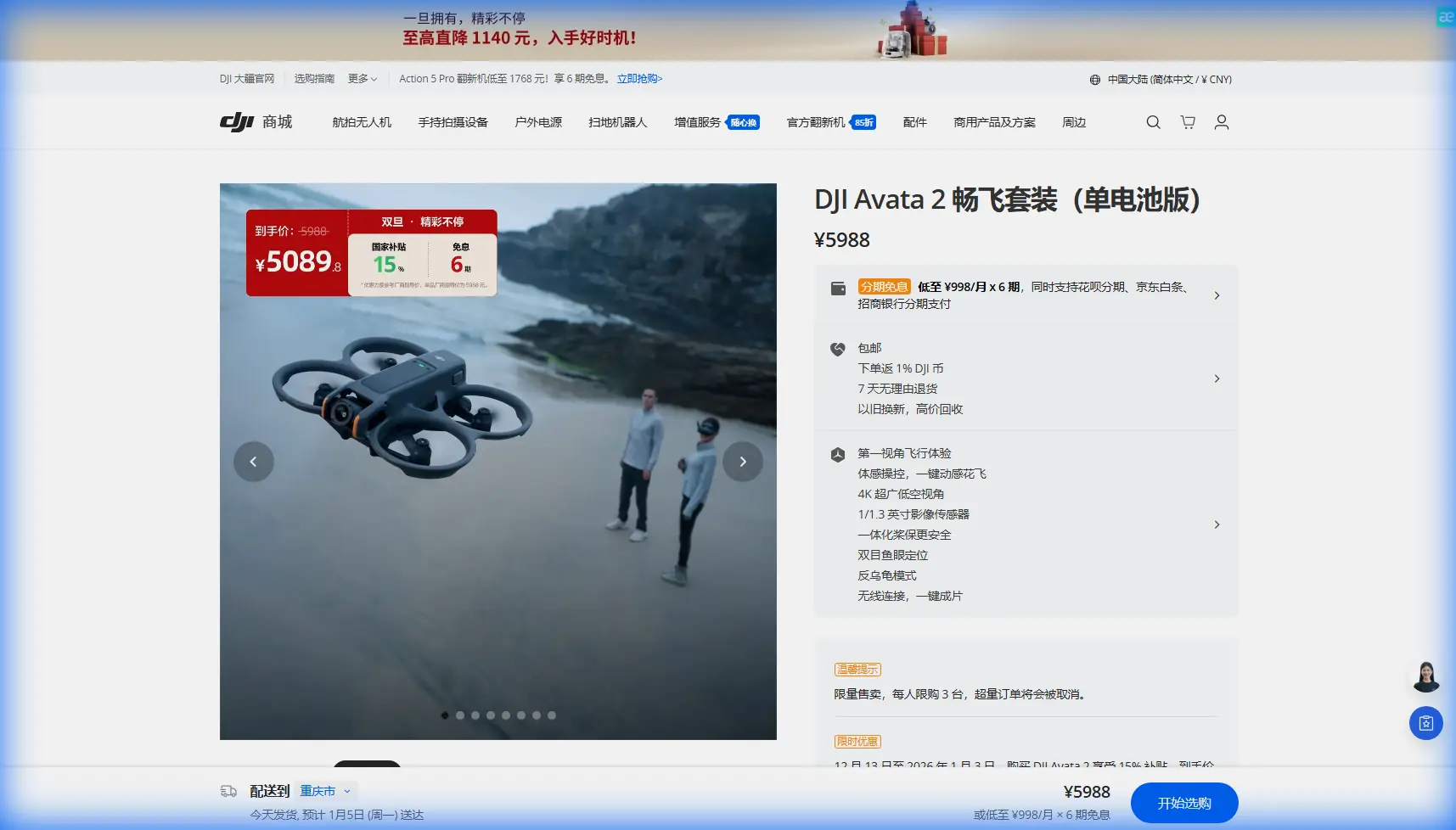
Expert Coastal Cinematography with DJI Avata 2
META: Master coastal drone filming in challenging winds with the DJI Avata 2. Professional tips for stunning shoreline footage using advanced stabilization and tracking.
TL;DR
- Avata 2's motion controller enables intuitive flight adjustments when coastal gusts shift unexpectedly mid-shoot
- RockSteady 3.0 stabilization maintains buttery-smooth footage even in winds exceeding 10.7 m/s
- D-Log color profile preserves highlight and shadow detail critical for high-contrast beach environments
- 155° super-wide FOV captures expansive seascapes without multiple passes
Coastal cinematography punishes unprepared pilots. Salt spray, sudden gusts, and rapidly changing light conditions destroy footage and damage equipment. The DJI Avata 2 addresses these challenges with a combination of aggressive stabilization, intelligent flight modes, and a sensor optimized for high-dynamic-range environments—making it my go-to platform for professional shoreline work.
After eighteen months of coastal assignments across three continents, I've developed specific workflows that leverage this drone's unique capabilities. This guide shares those techniques so you can capture publication-ready coastal footage regardless of conditions.
Understanding Coastal Wind Challenges
Ocean winds behave differently than inland conditions. Thermal updrafts from sun-heated sand collide with cooler maritime air, creating turbulent zones that shift without warning. Cliffs and rock formations generate mechanical turbulence that can throw a drone off course mid-shot.
Traditional camera drones struggle in these environments. Their larger surface area catches wind like a sail, and their gimbal systems work overtime to compensate for constant buffeting.
The Avata 2's compact ducted design changes this equation. The propeller guards double as aerodynamic fairings, reducing drag coefficient while protecting the props from debris. Combined with its low center of gravity, the aircraft maintains stability in conditions that ground larger platforms.
Real-World Wind Performance
During a recent assignment documenting erosion patterns along the Oregon coast, conditions shifted dramatically mid-flight. What started as a calm morning shoot transformed when a marine layer pushed inland, bringing sustained 25 km/h winds with gusts to 40 km/h.
Rather than abandoning the shoot, I switched to Sport mode and used the motion controller's intuitive inputs to make micro-adjustments against the gusts. The Avata 2's obstacle avoidance sensors remained active, preventing collision with a rock formation that suddenly appeared through the fog.
Expert Insight: When winds exceed 8 m/s, reduce your planned flight radius by 30%. The Avata 2 will consume significantly more battery fighting headwinds on return legs. I always maintain a 40% battery reserve for coastal work rather than the typical 25%.
Mastering D-Log for Coastal Environments
Beach environments present extreme dynamic range challenges. Bright sand and water reflections can exceed 16 stops of contrast against shadowed cliff faces. Standard color profiles clip highlights and crush shadows, destroying recoverable detail.
The Avata 2's D-Log M profile captures approximately 10 stops of dynamic range, preserving information across the entire tonal range. This flat, desaturated footage requires color grading but provides maximum flexibility in post-production.
D-Log Settings for Coastal Work
Configure your Avata 2 with these parameters for optimal coastal footage:
- Color Mode: D-Log M
- ISO: 100 (native) whenever possible
- Shutter Speed: Double your frame rate (1/60 for 30fps, 1/120 for 60fps)
- White Balance: Manual, typically 5600K-6500K for daylight coastal
- ND Filter: Essential—I carry ND8, ND16, and ND32 for varying conditions
The 1/1.3-inch CMOS sensor handles these settings well, though noise becomes visible above ISO 400. For golden hour and overcast conditions, the sensor's f/2.8 aperture gathers sufficient light at native ISO.
Pro Tip: Coastal haze acts as a natural diffuser, softening harsh midday light. Some of my best footage comes from slightly overcast conditions that most photographers avoid. The Avata 2's sensor handles these flat-light situations beautifully with D-Log.
Leveraging Subject Tracking for Dynamic Shots
ActiveTrack technology transforms how I approach coastal subjects. Whether following surfers, tracking wildlife, or orbiting rock formations, the system maintains focus while I concentrate on flight path and composition.
The Avata 2's downward and backward vision sensors enable subject tracking even during aggressive FPV-style maneuvers. The system predicts subject movement and adjusts gimbal position accordingly.
Tracking Workflow for Coastal Subjects
For moving subjects like surfers or kayakers:
- Establish initial framing in Normal mode
- Activate ActiveTrack by tapping the subject on your display
- Transition to Sport mode for faster pursuit capability
- Use motion controller inputs to adjust orbit radius and altitude
- Let the gimbal handle subject centering while you fly the path
This division of labor—automated tracking plus manual flight path—produces cinematic results impossible with either approach alone.
QuickShots and Hyperlapse Applications
Automated flight modes serve specific purposes in coastal work. QuickShots provide consistent, repeatable movements for B-roll, while Hyperlapse compresses time to reveal tidal patterns and cloud movement.
Effective QuickShots for Coastlines
| QuickShot Mode | Best Coastal Application | Duration | Notes |
|---|---|---|---|
| Dronie | Establishing shots of beach scenes | 5-15 sec | Start low, end high for maximum reveal |
| Circle | Rock formations, tide pools | 10-20 sec | Maintain consistent altitude |
| Helix | Lighthouse, pier structures | 15-25 sec | Ascending spiral adds drama |
| Rocket | Cliff reveals | 8-12 sec | Pure vertical for maximum impact |
| Boomerang | Surfer/kayaker reveals | 10-15 sec | Combines approach and retreat |
Hyperlapse for Tidal Documentation
Coastal Hyperlapse requires patience and planning. The Avata 2's Waypoint Hyperlapse mode flies a programmed path repeatedly, capturing frames at set intervals.
For tidal documentation, I program a simple 200-meter linear path parallel to the shoreline, capturing one frame every 10 seconds over a two-hour period. The resulting footage compresses tidal movement into 15-20 seconds of dramatic time-lapse.
Battery limitations require multiple flights. I use three batteries in rotation, landing to swap while maintaining the programmed path. The Avata 2's precise GPS positioning ensures seamless continuity between flights.
Technical Specifications Comparison
| Feature | Avata 2 | Avata (Original) | Typical Racing FPV |
|---|---|---|---|
| Max Wind Resistance | 10.7 m/s | 10.7 m/s | 8-9 m/s |
| Sensor Size | 1/1.3-inch | 1/1.7-inch | 1/2.3-inch or smaller |
| Video Resolution | 4K/60fps | 4K/60fps | 4K/60fps |
| D-Log Support | Yes | Yes | Rarely |
| ActiveTrack | Yes | No | No |
| Obstacle Avoidance | Downward + Backward | Downward only | None |
| Flight Time | 23 minutes | 18 minutes | 5-8 minutes |
| Transmission Range | 13 km (FCC) | 10 km | 1-2 km |
The Avata 2's combination of extended flight time and advanced stabilization makes it uniquely suited for professional coastal work where conditions demand both endurance and precision.
Common Mistakes to Avoid
Ignoring salt exposure protocols. Salt spray corrodes electronics rapidly. After every coastal flight, wipe all surfaces with a slightly damp microfiber cloth, then dry completely. Pay special attention to motor bearings and sensor lenses.
Flying directly into offshore winds. Always begin coastal flights heading into the wind. This ensures you have tailwind assistance on return when battery levels are lower. I've watched pilots strand drones offshore by reversing this logic.
Neglecting ND filters. Bright coastal conditions require neutral density filtration to maintain proper shutter speeds. Without ND filters, you'll either overexpose or use shutter speeds so fast that footage looks unnaturally sharp and jittery.
Trusting obstacle avoidance completely. The Avata 2's sensors struggle with thin objects like fishing lines, kite strings, and wire fencing common in coastal areas. Maintain visual awareness regardless of automated safety systems.
Forgetting spare propellers. Sand infiltration and minor impacts take a toll. Damaged props create vibration that ruins footage and stresses motors. I carry two complete prop sets for every coastal assignment.
Frequently Asked Questions
Can the Avata 2 handle ocean spray during flight?
The Avata 2 lacks official water resistance ratings. Light mist typically causes no immediate issues, but salt accumulation damages components over time. Avoid flying through breaking waves or heavy spray. If the aircraft gets wet, power down immediately and dry thoroughly before next use.
What's the best time of day for coastal drone footage?
Golden hour—the hour after sunrise and before sunset—provides optimal lighting with warm tones and long shadows that add dimension to coastal features. Midday sun creates harsh shadows and blown highlights, though overcast conditions can extend your shooting window throughout the day.
How do I maintain GPS lock near cliffs and rock formations?
Tall coastal features can block satellite signals, causing position drift. Before flying near cliffs, hover in an open area until the Avata 2 acquires at least 12 satellites. Avoid flying in narrow canyons or directly against cliff faces where signal reflection causes multipath errors.
Coastal cinematography demands equipment that performs when conditions deteriorate. The Avata 2 delivers the stability, image quality, and intelligent features that professional shoreline work requires. Master these techniques, respect the environment's challenges, and you'll capture footage that stands apart from typical drone content.
Ready for your own Avata 2? Contact our team for expert consultation.