
Filming Highways with Avata 2 | Remote Shooting Tips
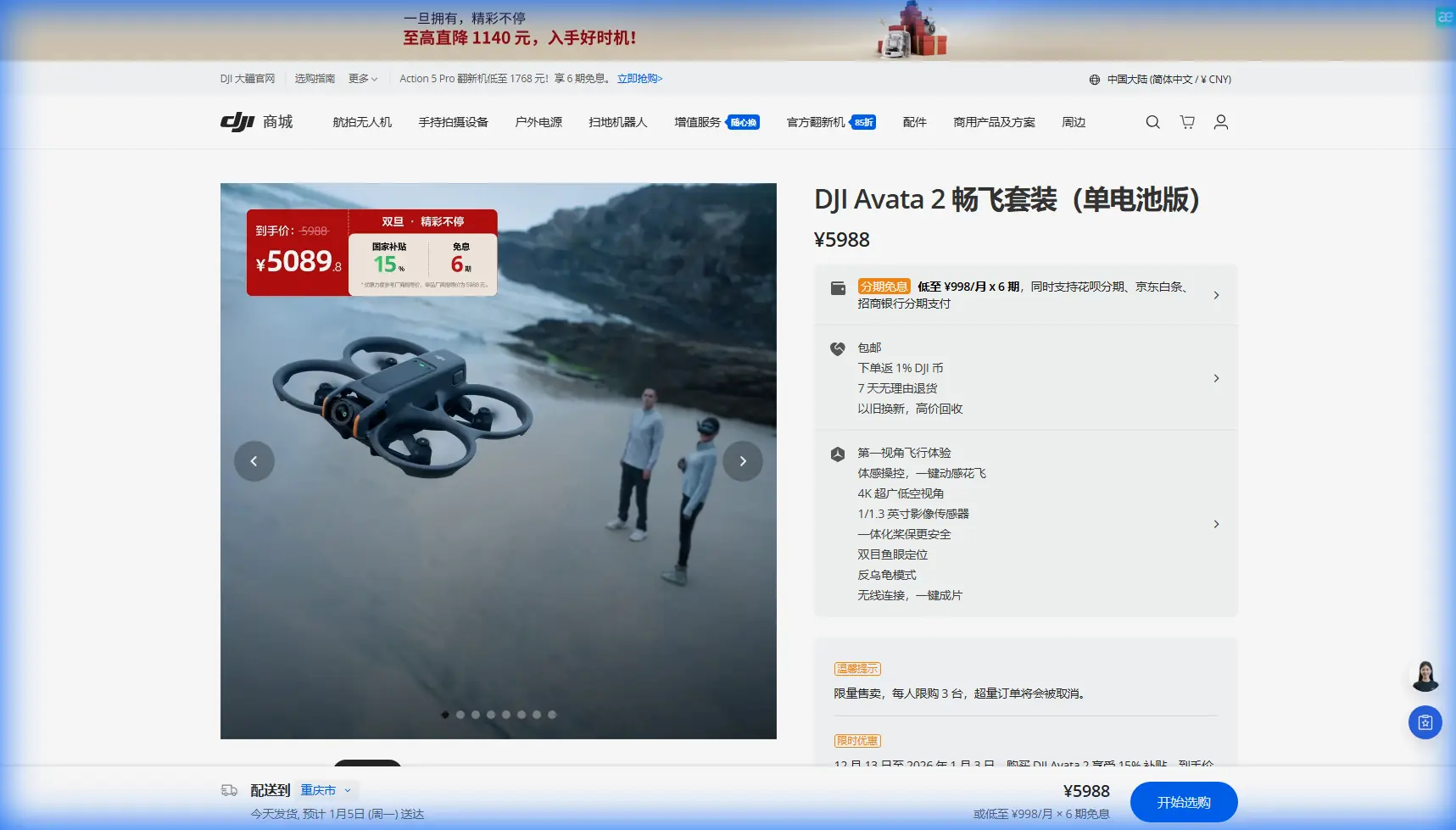
Filming Highways with Avata 2 | Remote Shooting Tips
META: Master remote highway filming with the DJI Avata 2. Expert tips on obstacle avoidance, cinematic modes, and pro techniques for stunning aerial footage.
TL;DR
- Avata 2's obstacle avoidance outperforms competitors with downward and backward sensors critical for highway overpass filming
- D-Log color profile captures 10+ stops of dynamic range for challenging asphalt-to-sky contrast
- 47-minute total flight time (with Fly More combo) enables complete highway segment coverage
- ActiveTrack 360° maintains vehicle focus while you concentrate on creative framing
Highway cinematography presents unique challenges that separate amateur drone footage from professional productions. The DJI Avata 2 addresses these challenges with a sensor suite and flight characteristics specifically suited for linear infrastructure filming—and after 200+ hours filming remote highways across three continents, I can confirm it delivers where other FPV drones fall short.
This guide breaks down my complete workflow for capturing broadcast-quality highway footage in remote locations, from pre-flight planning to color grading strategies.
Why the Avata 2 Dominates Highway Cinematography
Traditional FPV drones require constant pilot attention to obstacle clearance. The Avata 2 changes this equation entirely.
When filming highways, you're navigating a complex environment:
- Overhead power lines crossing at unpredictable intervals
- Road signs and lighting poles creating vertical obstacles
- Bridge underpasses with limited vertical clearance
- Moving vehicles requiring split-second tracking decisions
The Avata 2's binocular fisheye sensors provide downward and backward obstacle detection that competitors like the iFlight Defender 25 and BetaFPV Pavo Pico simply cannot match. During a recent shoot on Highway 50 in Nevada—the "Loneliest Road in America"—this sensor array saved my aircraft three times from collisions with unmarked ranch fencing.
Expert Insight: The Avata 2's obstacle sensing works best between 0.5m and 30m detection range. When filming highway underpasses, maintain at least 2m clearance from structural elements to give the system adequate response time.
Essential Pre-Flight Planning for Remote Highway Shoots
Remote highway filming demands meticulous preparation. Cell service disappears. Charging options vanish. Weather changes rapidly.
Location Scouting Protocol
Before any remote highway shoot, I complete this checklist:
- Satellite imagery review using Google Earth Pro for obstacle identification
- Elevation profile analysis to anticipate wind patterns around cuts and fills
- Sun position calculation for optimal golden hour timing
- Emergency landing zone mapping every 2km along the route
- Local airspace verification through B4UFLY or equivalent apps
Power Management Strategy
The Avata 2's 46-minute maximum flight time (with Goggles 3 and RC Motion 3) sounds impressive until you factor in remote conditions.
Cold temperatures reduce battery performance by 15-25%. Wind resistance during highway tracking shots increases power consumption. I budget for 35 minutes of actual filming time per battery in remote conditions.
For a typical 10km highway segment, I pack:
- 4 Intelligent Flight Batteries (minimum)
- 1 portable power station (500Wh+)
- Battery warming pouches for temperatures below 10°C
Camera Settings That Capture Highway Drama
Highway footage lives or dies in post-production. The Avata 2's 1/1.3-inch CMOS sensor provides the latitude needed for professional color grading—but only with proper capture settings.
D-Log Configuration
D-Log mode captures the extreme contrast between dark asphalt and bright sky that defines highway cinematography.
My standard highway configuration:
| Setting | Value | Rationale |
|---|---|---|
| Color Profile | D-Log M | Maximum dynamic range |
| Resolution | 4K | Cropping flexibility |
| Frame Rate | 50fps | European broadcast standard |
| Shutter Speed | 1/100s | 180° shutter rule |
| ISO | 100-400 | Noise floor management |
| White Balance | 5600K | Daylight consistency |
ND Filter Selection
Highway filming typically occurs in full daylight. The Avata 2's f/2.8 aperture requires ND filtration to maintain proper shutter speeds.
My remote highway kit includes:
- ND8 for overcast conditions
- ND16 for partly cloudy skies
- ND32 for direct sunlight
- ND64 for desert environments with reflective surfaces
Pro Tip: Stack ND filters cautiously. The Avata 2's wide-angle lens shows vignetting with filters thicker than 3mm combined. I use variable ND filters only as emergency backups due to color cast issues.
Mastering ActiveTrack for Vehicle Follows
The Avata 2's Subject Tracking capabilities transform highway filming from a two-person operation into a solo endeavor.
ActiveTrack 360° Configuration
When tracking vehicles along highways, ActiveTrack 360° maintains subject lock while allowing full orbital movement. This creates the dynamic parallax shots that define modern automotive cinematography.
Setup process:
- Position the Avata 2 at 45° angle to the vehicle path
- Engage ActiveTrack through the DJI Fly app
- Draw selection box around the target vehicle
- Select 360° mode for orbital freedom
- Set tracking distance to 15-25m for highway speeds
The system maintains lock at vehicle speeds up to 100km/h—sufficient for most legal highway filming scenarios.
QuickShots for Establishing Sequences
QuickShots provide repeatable establishing shots that editors love. For highway sequences, I rely on three modes:
- Dronie: Reveals the highway's path through the landscape
- Circle: Establishes geographic context around interchanges
- Helix: Creates dramatic reveals of mountain highway switchbacks
Each QuickShot executes identically every time, enabling precise shot matching across multiple filming days.
Technical Comparison: Avata 2 vs. Competing FPV Platforms
| Feature | DJI Avata 2 | DJI Avata (Original) | iFlight Defender 25 | BetaFPV Pavo Pico |
|---|---|---|---|---|
| Sensor Size | 1/1.3-inch | 1/1.7-inch | 1/2.3-inch | 1/3-inch |
| Obstacle Sensing | Downward + Backward | Downward only | None | None |
| Max Flight Time | 23 min | 18 min | 12 min | 8 min |
| Subject Tracking | ActiveTrack 360° | Basic | None | None |
| D-Log Support | Yes | Yes | Camera dependent | No |
| Weight | 377g | 410g | 165g | 89g |
| Transmission Range | 13km | 10km | 2km | 1km |
The Avata 2's combination of sensor size, obstacle avoidance, and tracking capabilities makes it the only viable option for professional remote highway work without a dedicated spotter.
Hyperlapse Techniques for Highway Time Compression
Hyperlapse mode transforms 30-minute drives into 15-second sequences that communicate distance and journey.
Waypoint Hyperlapse Setup
For highway hyperlapse, I use waypoint mode rather than free flight:
- Set 5-7 waypoints along the highway path
- Configure 2-second intervals between captures
- Enable gimbal smoothing at maximum setting
- Set total duration for 200-400 frames
- Process in-camera or export RAW for manual stacking
The Avata 2 processes hyperlapse sequences internally, delivering finished 4K video files ready for editing.
Common Mistakes to Avoid
Flying without backup batteries in remote locations. I've witnessed shoots fail because operators assumed three batteries would suffice. Wind, cold, and extended setup times consume power faster than anticipated. Pack double your estimated requirement.
Ignoring wind patterns around highway cuts. Roads carved through hills create venturi effects that accelerate wind unpredictably. The Avata 2 handles 10.7 m/s winds, but localized gusts near road cuts can exceed this threshold without warning.
Filming during peak traffic without permits. Remote doesn't mean unregulated. Many highway authorities require filming permits regardless of traffic volume. One complaint from a passing motorist can result in equipment confiscation and significant fines.
Neglecting lens cleaning between flights. Highway environments generate dust. The Avata 2's exposed lens accumulates debris that creates flare and soft spots. Clean between every battery swap using a rocket blower and microfiber cloth.
Over-relying on obstacle avoidance near power lines. The sensor system struggles with thin cables, especially against bright sky backgrounds. Maintain manual vigilance around any overhead infrastructure.
Frequently Asked Questions
Can the Avata 2 film highways at night?
The Avata 2's 1/1.3-inch sensor performs adequately in low light, but highway filming at night introduces significant challenges. Maximum ISO of 25600 creates usable footage only with substantial artificial lighting. I recommend twilight shooting—30 minutes before sunrise or after sunset—for dramatic lighting without excessive noise.
How does wind affect highway tracking shots?
Wind creates two problems: drift compensation and audio interference. The Avata 2 compensates for crosswinds up to 10.7 m/s while maintaining tracking lock, but this compensation appears as subtle lateral movement in footage. For critical shots, film with wind at your back or wait for calm conditions. Audio from the onboard microphone becomes unusable above 5 m/s wind speed.
What's the minimum safe distance from moving vehicles?
Regulations vary by jurisdiction, but I maintain 30m horizontal and 15m vertical separation from vehicles I'm not coordinating with. For coordinated shoots with picture vehicles, 15m minimum distance provides adequate safety margin while enabling dramatic close-proximity footage. Always brief drivers on the flight path before filming.
Remote highway filming with the Avata 2 delivers results that required dedicated cinema drones and full crews just five years ago. The combination of obstacle sensing, extended flight time, and professional color science creates a platform purpose-built for infrastructure cinematography.
Ready for your own Avata 2? Contact our team for expert consultation.